
...

Free delivery in Serbia for orders over 3000 RSD.

Language

Soy wax candles. A healthy story.

Soy wax candles?
How did it all begin?

Historically, soy wax is a relatively new invention and a raw material that has found its place in the world of natural cosmetics, as well as in the world of scented candles and aromatherapy.

Soy wax was discovered in the early 90s, specifically in 1991. It was discovered by Michael Richards, who was researching cheaper alternatives for natural wax compared to beeswax. At that time, the demand for natural wax candles began to rise in the market, while beeswax was 10 times more expensive than paraffin. Michael Richards tested various plant wax alternatives until he decided on a wax obtained by hydrogenating soy bean meal, coconut, and palm oil. Later, he mixed beeswax with soy wax to reduce the cost of his products.

The first true candle made of pure soy wax appeared on the market only in 1995. Michael finally managed to replace the expensive beeswax with soy wax and launch his scented candles on the American market.

After that, various studies followed on the benefits of soy wax compared to the paraffin wax that was dominant on the market at the time. This research The research showed numerous benefits of soy wax, both for the environment and human health.

You can view the research results here:

  1. Rezaei, K., T. Wang, and L. A. Johnson. Hydrogenated vegetable oils as candle wax. J. Am. Oil Chem. Soc. 79: 1241-1247 (2002).
  2. Rezaei, K, T. Wang, and L.A. Johnson. Combustion characteristics of candles made from hydrogenated soybean oil. J. Am. Oil Chem. Soc. 79: 803-808 (2002).
  3. Ojewumi Modupe Elizabeth, Production of Candle from Oil Extract of a Legume – Soybean,DOI:10.35940/ijeat.B2382.129219 (2019)

When it comes to buying scented candles, scent and aroma should not be the only factors influencing the purchasing decision. Scented candles can be made from different types of wax, each with specific properties that affect the quality of the final product. Scented candles can be made from paraffin wax, soy wax, palm wax, etc.

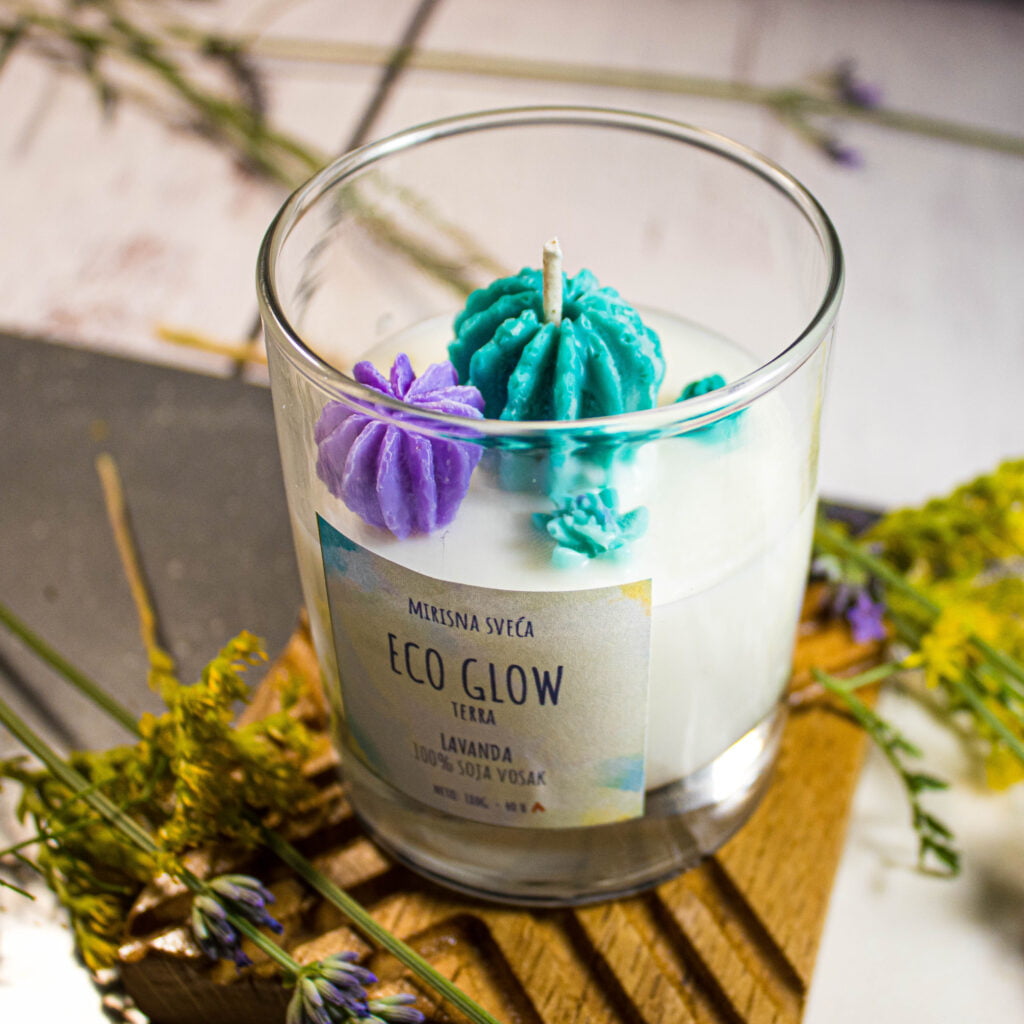
Balavander's candle-making studio scented candles We use only 100% non-GMO soy wax, which is one of the secrets that sets our products apart from others.

eco glow soy candles acacia

What is soy wax?

Soy wax is a natural raw material obtained by processing soybeans and soy meal. Along with corn, soy is one of the most widely grown agricultural crops in the United States.

Immediately after harvesting, the soybeans are cleaned and ground. Soy oil is extracted from the ground soybeans, while the remaining residues are used as animal feed.
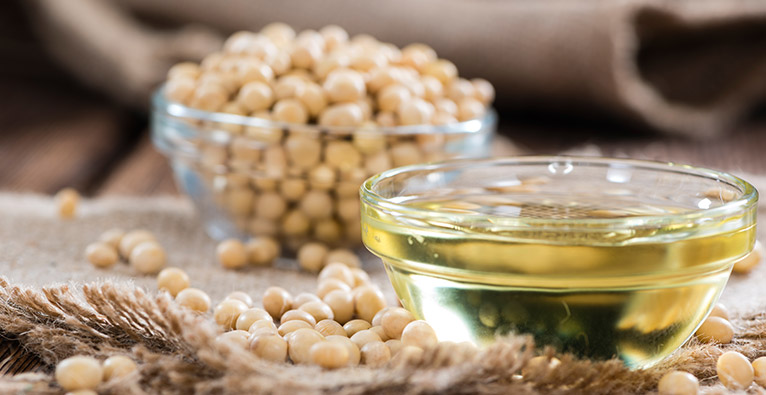
soybean-processing.jpg

Paraffin wax, one of the most popular types of wax due to its low cost, is produced in a completely opposite way and under a different philosophy. Paraffin wax is a product of oil and petroleum filtration. When substances unsuitable for combustion in engines are removed from crude oil, paraffin wax remains.

Kako se dobija sojin vosak?

Soy wax is obtained from soybean oil. Soybean oil is separated from solid matter in the process of extraction or mechanical pressing. The oil obtained in this way is then filtered and bleached.

To obtain 1 liter of soybean oil, about 6 kilograms of fresh soybeans are needed.

Hydrogenation is a process in which soybean oil is converted from a liquid state to a solid state. At the end of this process, we obtain real soy wax in the form of flakes, which can then be used for the production of scented candles or in natural cosmetics.

Hydrogenation of soybean oil

The main step in the production and obtaining of soy wax is hydrogenation. This is a process in which the saturated components of soybean oil are converted into a solid state. This reaction occurs when hydrogen reacts with oil heated to a temperature of 140 – 225°C in the presence of nickel. It is very important that the entire mixture is constantly stirred so that the hydrogen evaporates and a reaction of the catalyst and oil is obtained.

Hydrogenation creates saturated fatty acids that are not suitable for eating, but when it comes to application in the production of scented candles, this phenomenon does not present any problem. By hydrogenating pure soybean oil, pure soy wax is obtained, whose texture is quite soft. Therefore, pure soy wax is not suitable for making scented candles that are not in some container, glass or jar. Keep this in mind when you come across candle manufacturers who advertise their candles of different molds and shapes as pure soy wax candles.

In order for soy wax to gain the hardness that is suitable for the production of molded scented candles, either paraffin wax or stearic acid must be added to the soy wax itself.

Balavander's candle-making studio produces only candles in glass jars, glasses or aluminum containers, precisely because the texture of pure soy wax is too soft to retain the shape of a silicone mold.

Just a healthy story.

Scented candles with a soul

Natural scented candles for you!

If you want to see all our natural scented candles, visit our store.

Soy candles, soot and smoke?

Research „Combustion Characteristics of Candles Made from Hydrogenated Soybean Oil“ The research focuses on comparing the burning characteristics of candles made from soy, paraffin, and beeswax.

The researchers focused on the following aspects: the formation of soot and smoke, the release of harmful substances into the air, and the burning time.

Test candles were made from 200 grams of wax of the appropriate type.

To determine the amount of soot that forms when a candle burns, researchers placed a funnel above the lit candle and placed an air filter in the funnel. The amount of soot was then determined by observing the color and contamination of the filter.

Research results showed that a paraffin wax candle produces significantly more soot compared to a candle made from soy wax.

All paraffin candles even visually produced soot during burning, which was not the case with soy and beeswax candles.

Soy candles melted more slowly. The explanation for this phenomenon is that soy wax molecules are much larger than paraffin wax molecules. This results in soy wax molecules filling the wick more slowly, thus coming into contact with the flame more slowly and burning more slowly.

A simple comparative test between a paraffin candle (left) and a soy candle (right) showed that after extinguishing the candle, the appearance of smoke and soot is drastically more noticeable in the paraffin candle.

soot formation

Soy candles and burning time

Soy candles have multiple advantages over other types of candles. Some benefits are obvious, but others are a bit harder to prove. For this reason, scientists approached the research and comparison of the burning time between paraffin candles and soy candles. Official results showed that soy candles have a longer burning time, produce less smoke, and release fewer harmful substances into the environment. The research also showed that if a soy candle is used with a wick that is not trimmed to the appropriate length, the soy candle burns for a shorter time than the paraffin one. However, when the soy candle is used with a trimmed wick at the proper length A soy candle lasts 30% longer than a paraffin candle. A simple test with two 80-gram candles, one made of paraffin wax (on the right) and the other made of soy wax (on the left), showed the mentioned results. The soy candle burns longer. soy candle burning rate

How is a soy candle used?

We will share with you a few tricks on how to best enjoy your soy candles for as long as possible and in a safe way.

  • Although candles made from soy wax produce much less soot compared to paraffin candles or candles made from some other wax, it is not recommended to light too many candles in one room at the same time. Also pay attention to ventilation in the room.
  • Before each lighting of a soy candle, check the wick and shorten it to a length of 5-7 millimeters. If the wick is burned, shorten that part. This way the wick will not smoke and the candle will last longer.

    Keep lit candles out of reach of children, pets and flammable objects. Do not leave a lit candle unattended.

  • Soy candles should not stand in the sun for too long so that the color does not fade.
  • When using follow the manufacturer's instructions..
  • If you have several candles lit at the same time, the distance between them should be at least 15 cm.
  • After use, allow the candle and melted wax to cool and solidify before relighting the wick.
  • When extinguishing the candle, use a tool designed for this purpose. This tool is used to dip the wick into the melted wax to prevent smoke from forming, and then straighten it.
  • Recommendation for proper use soy candles that they keep them lit for 2 hours for every 5 cm in diameter (example: if the candle has a diameter of 7 cm, keep it lit for at least 3 hours.

    In this way, you will give your candle enough time to form a so-called wax pool and to evenly melt the wax across the entire surface. This will prevent the formation of a “tunnel,” the candle will last longer, and you will use every gram of wax in it.

  • Keep the candle on a flat surface. Do not allow the flame to touch the walls of the container in which the candle is placed, in order to prevent excessive heating of the container and potential cracking.

Conclusion

With this story, we have tried to bring you closer to the benefits and characteristics of soy wax used in the production of scented candles.

We have pointed out the true characteristics of soy wax, so that (if you care about that), you could easily assess and evaluate the quality when the opportunity arises.

Soy candles – A healthy story.

With smile,
Balavander

Leave a Reply

Your email address will not be published. Required fields are marked *