




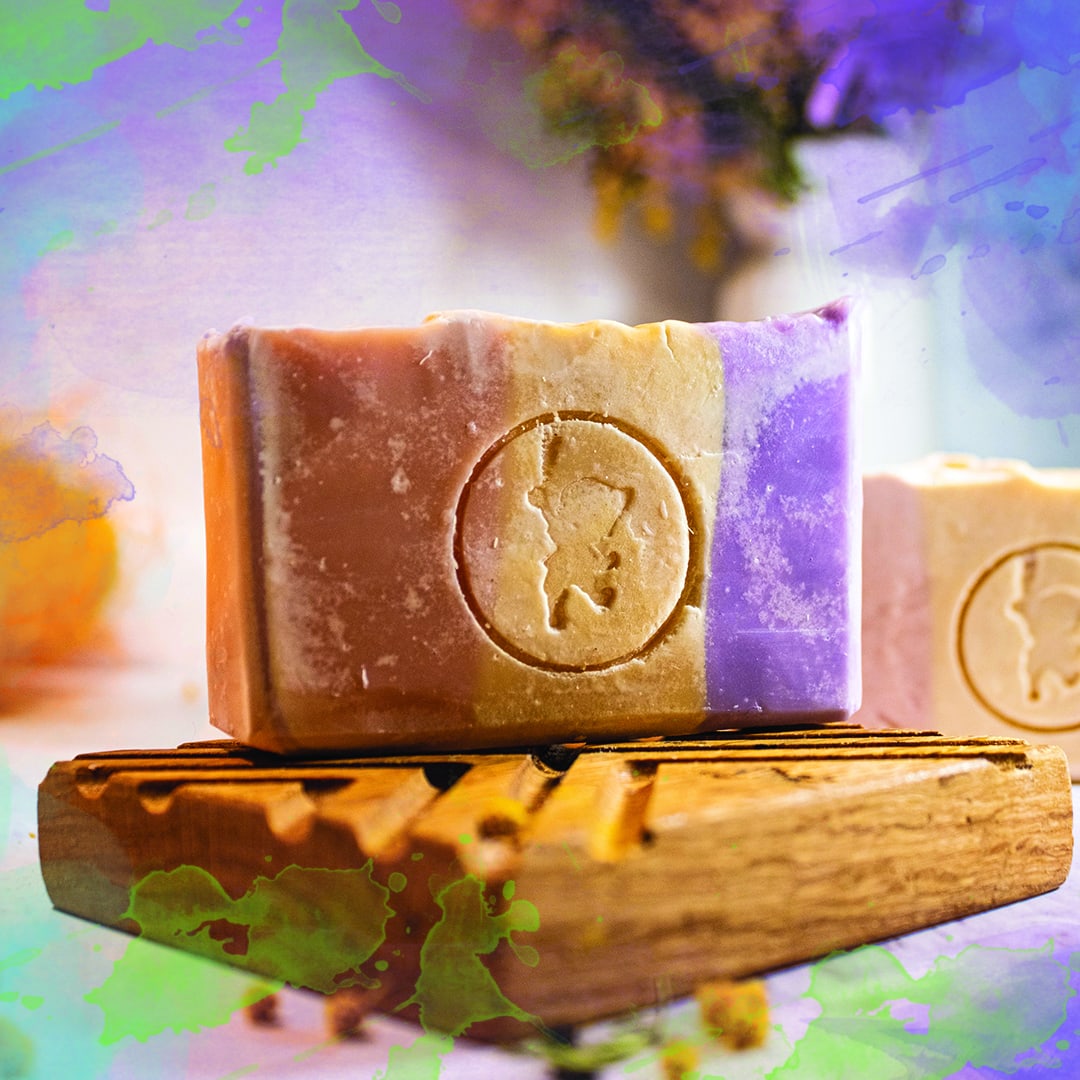
Natural soaps A small detail that delivers a sense of luxury, while still being affordable for everyone. As we like to say, they represent both a step into the future and a return to tradition and forgotten values.
When it comes to the process of making natural soaps, there are several production methods.
- Cold Process
- Hot Process
- Melting a pre-made base
Each of these processes is fundamentally different and requires appropriate skills.
We will discuss the detailed differences between these processes in another article, and for now we will focus on the process that Balavander uses in the production of its soaps. natural soaps.
Table of content
Natural Soaps – Cold Process
The cold process means that no additional heat source is used to make natural soap. All the magic happens through the chemical processes behind it.
The main difference between the cold process and other possible methods is that the cold process does not use pre-made commercial bases or anything similar.
Znači stvari držimo pod svojom kontrolom i ne koristimo stvari koje su „crna kutija“ i ne znamo šta se tačno u njima nalazi, znači hladni proces je tzv. „pravljenje od nule“.
This process involves several stages and requires a sterile environment and tools.
1. Precise measurement of oils in liquid form, e.g., olive oil, castor oil, pumpkin seed oil, etc.
2. Precise measurement of oils in solid form, e.g., palm and coconut oils, which are actually solid at room temperature.
3. Precise measurement of plant butters, e.g., mango butter, shea butter, etc.
Each individual oil, through its characteristics, contributes to certain qualities of the final product. Some oils contribute to the quality of the lather, other oils contribute to the moisturizing factor, and still other oils contribute to the firmness of the soap, etc.
Each recipe is developed based on the characteristics we want from the final product, and accordingly we define the proportion of ingredients.
Every Balavander original recipe is precisely specified, and therefore we strictly ensure that there are no deviations. In this way, we guarantee that each batch is of the same quality as the previous one.
4. Precise measurement of distilled water
5. Precise measurement of alkalis; in our case, this is Sodium Hydroxide (NaOH). When working with NaOH, careful attention must be paid to safety and handling procedures. During dissolution, NaOH can reach temperatures up to 200°C.
When we have devoted enough time and attention and prepared all the necessary ingredients, we move on to the next steps.
6. We carefully prepare the solution Sodium Hydroxide.
7. At the appropriate temperature, we mix the blend of plant oils and butters with this solution and observe the chemical process occurring before us. This is saponification, where, essentially, during the reaction of oil molecules and Sodium Hydroxide, corresponding molecular bonds are formed and the oil changes its form. At the end of the process, we obtain a mixture that becomes soap.
8. We add mineral colors and essential oils.
9. We pour the mixture into a mold.
10. We wait 24–48 hours to see the result of our work.
After removing the soap from the mold, we cut and decorate it, then let it rest for 4 to 6 weeks.
During this period, we check the pH value of each batch. Once the pH reaches the appropriate level and we ensure the soap is safe to use, we package it and smile with satisfaction.
You can actually see how this looks in practice in the following video.
Conclusion
The Making Process natural soaps is a very fun and creative process.
It requires a lot of patience and practice, but in the end, every effort pays off.
We are especially happy because, in the end, we get a high-quality and healthy product that we can be proud of.
Natural soaps are a phenomenon of modern society, simultaneously representing a step into the future while also returning to old values and forgotten traditions.
So, in brief, we have tried to give you an insight into what happens in the Balavander workshop and the challenges we face.
The entire process requires great precision, and even small deviations can ruin all the effort, but for the most part, we come out as winners. 🙂
„Ručni rad iako fizički naporan, zapravo opušta.“
… from the life of a Balavander, 564 B.C.
Leave a Reply