




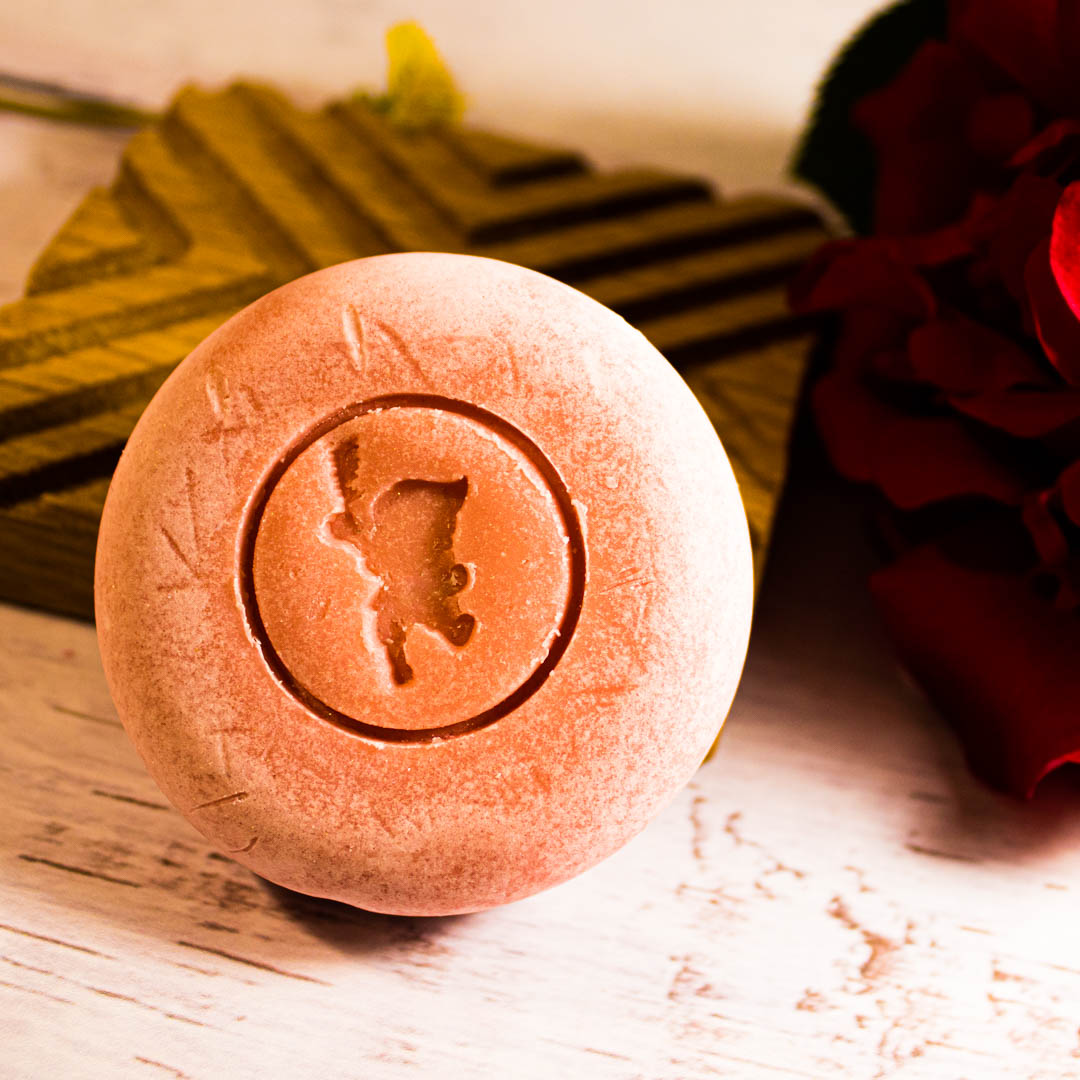
Example of saponification of natural soaps How do natural soaps nourish the skin? 1 The process of making natural soaps is a magical blend of science and art. Although soap, in some form, is a part of our everyday life, little is known about how soaps are actually made and what ingredients go into them. Terms such as „saponification“ or “superfat” are not often encountered in everyday speech, while, for example, a word like sodium hydroxide sounds a bit scary.
Balavander’s mission is to offer genuine, high-quality natural products made exclusively from natural and certified ingredients, without the addition of any chemicals or harmful substances.
We often receive questions about the production process of our natural soapsand on this occasion, we would like to share some little behind-the-scenes secrets with you and explain why our natural soaps are different from others and why we make them the way we do.
Table of content
What is saponification?
In simple terms, saponification is the name for the chemical reaction between a base and an acid, resulting in the formation of a salt. When making natural soaps using the cold process, oils and fats (the acidic part) are mixed with an alkaline solution (the basic part), which creates soap (which is actually a type of salt).
How does this chemical reaction happen at all?
To understand this process, we first need to explain
what bases and acids are made of.
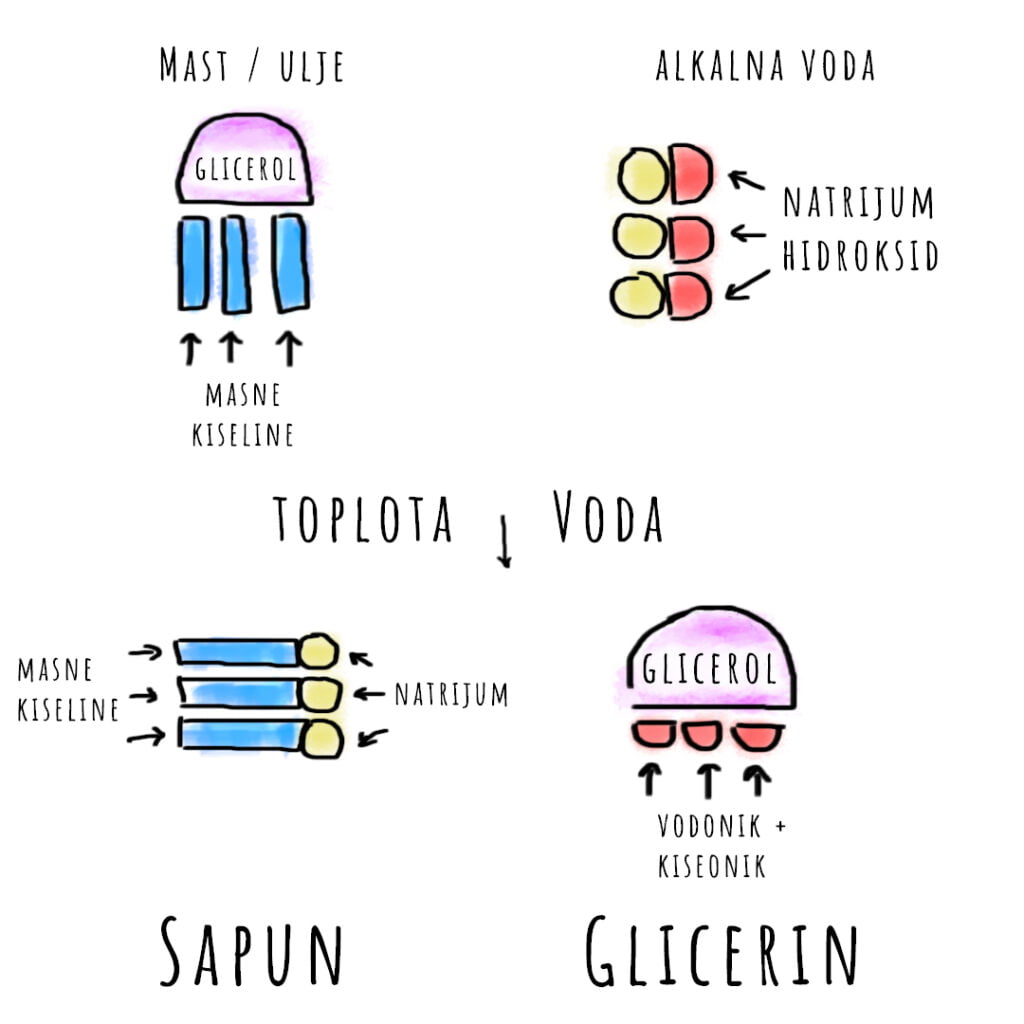
A base or alkali must contain one hydrogen ion. Most commonly, this is sodium hydroxide (alkaline water), which consists of one sodium ion and one hydrogen ion. When making soap, a base such as potassium hydroxide can also be used, which also contains one hydrogen ion. Its use is most common in the production of liquid soaps.
There are many different types of acids that can be used in the saponification process. These are often oils such as olive, coconut, castor, etc. Each oil has a unique combination of triglycerides. Triglycerides consist of three fatty acid molecules linked to one glycerol molecule. The amount of base needed for saponification depends on the oil’s composition and characteristics.
During the making of natural soaps carefully measured basic and acidic ingredients are mixed. During mixing at the appropriate temperature, a chemical reaction occurs. Triglycerides in the oils separate from the glycerol molecule, which turns into nourishing glycerin. This allows fatty acids to bind with hydrogen ions from the alkaloid, creating soap.
If we look at this process in more detail, we can conclude that in the soap-making process there are actually two reactions.
- Glycerol from fats and oils turns into glycerin, which is extremely important and beneficial for skin care.
- Elements of the base and the acid form a salt, which is actually what we call soap.
Magic and science in one place. Right?
Is sodium hydroxide dangerous?
Sodium hydroxide is an inorganic chemical obtained as a byproduct of salt electrolysis. Historically, ash mixed with animal fat and water was used to make soap. However, today this substance is produced in a laboratory.
The alkaline liquid is used in the process of making natural soaps to combine oil and water. The chemical reaction that occurs when an alkaloid mixed with water comes into contact with oils, results in bonds within fatty acid molecules breaking, and the alkaloid is neutralized.
Sodium hydroxide has a very high pH value and can cause skin burns. However, sodium hydroxide is dangerous only in its original form.
After the saponification process is complete in a natural soap
do not exist molecules of sodium hydroxide!
For this reason, the soap-making process requires a high level of precision, where all ingredients must be carefully measured to ensure that all parameters align, resulting in a safe and high-quality final product.
Due to this property of sodium hydroxide, it is also possible to preventively influence potential errors when measuring ingredients. This procedure is called “superfatting“. By using this method, not only is any possibility of sodium hydroxide remaining in the final product safely eliminated, but hydration properties are also added to the natural soap, giving it special value.
More about this in the next chapter.
What does "superfat" mean?
“Superfatting” is a process in natural soap production that involves adjusting the recipe and the proportions of ingredients. When creating the original formulation,
mathematically and chemically, it is possible to determine the exact amount of oil and the exact amount of alkali that can react with each other in the ideal ratio. These measurements need to be determined down to the milligram level, and each ingredient must be calculated separately. This approach is called “0% superfat,” which means that the mixture contains the ideally measured amounts of acid and base to produce the final product.
To eliminate the possibility of error and to neutralize the margin of error introduced by precise weighing, it is possible to use either less alkali or more oil than mathematically calculated. This actually means that in the final product there is an excess of oil that has not saponified. This excess oil is trapped between the salt molecules that make up the soap.
Natural soaps that contain an excess of plant oils have a beneficial effect and nourish our skin. By using such soaps, we not only remove impurities naturally, but also release the beneficial oils trapped in the soap itself, thereby simultaneously nourishing and caring for the skin.
Our natural soaps, depending on the properties of the plant oils and butters used in their composition, have a superfat value from 7% to 12%. This is the scientific explanation for why our natural soaps do not dry out the skin; on the contrary, after using them, the skin remains soft and hydrated.
What happens when a soap does not have “superfat”?
Besides the benefits it provides to the skin, “superfat” is also used as a safety measure when formulating the recipe.
Of course, sometimes it is desirable for soap to have no excess oil. Examples include dishwashing or laundry soaps, where we don’t want extra oil to go down the drain or remain on dishes or clothing. However, when soap is used for personal hygiene, we want it to have a beneficial effect on our skin.
In industrial production, where soaps are made in large batches and quantities, “superfat” not only does not exist—because it increases production costs—but the glycerin formed during the saponification process is also filtered out and removed, after which it is used to produce other cosmetic products to increase profit.
Keep this in mind the next time you choose a soap for personal hygiene.
How Do Natural Soaps Nourish the Skin?
As we have already mentioned, high-quality natural soaps are made in such a way that a certain amount of beneficial oils that have not saponified always remain in the final product. Although this important characteristic of natural soaps does not affect their chemical composition, it has a significant impact on their quality and the benefits they provide.
Hydration and Skin Care
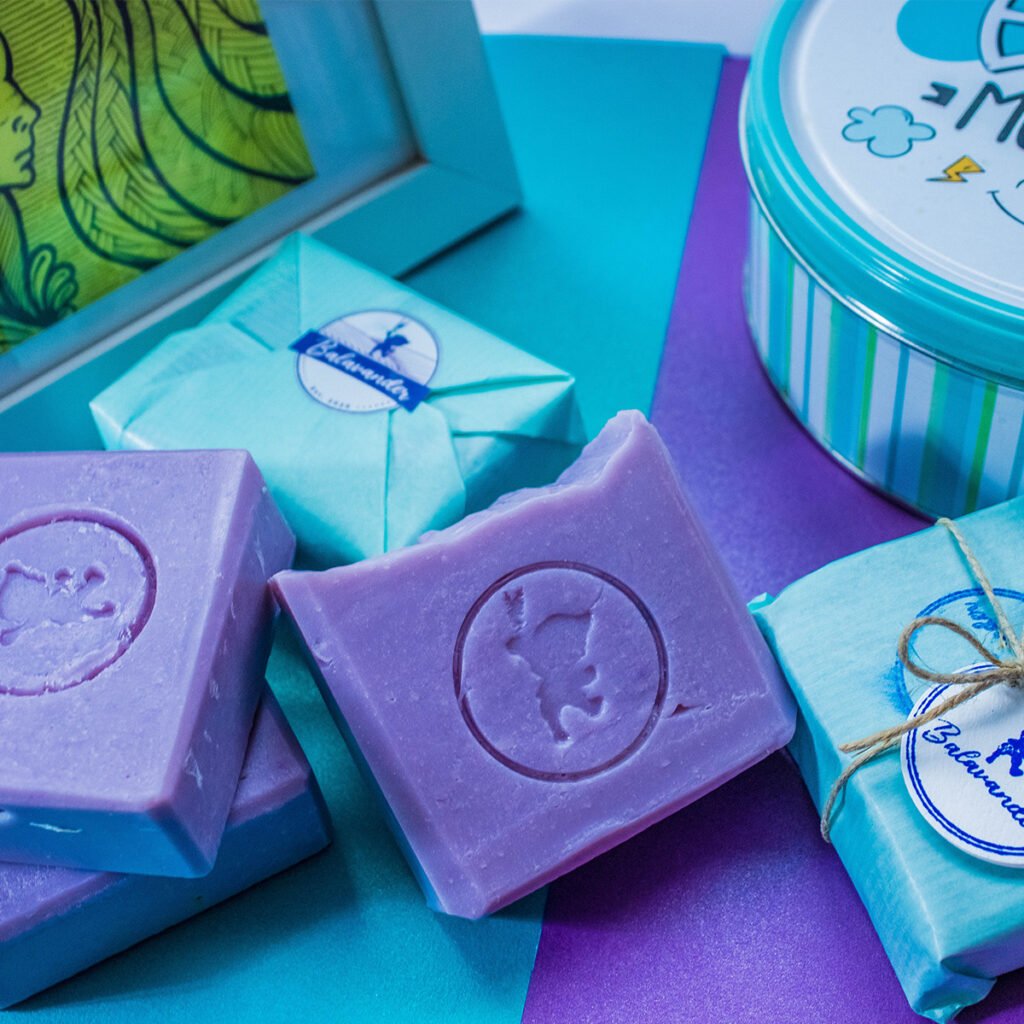
The main significance of having an excess of natural plant oils in our natural soaps is increased skin hydration. This makes them gentle and beneficial for the skin, unlike industrial soaps, which can be too harsh for sensitive skin or remove the natural oils and sebum from the skin, causing irritation and damage.
By using the “superfatting” method, we ensure that the final product is in perfect balance, naturally removing impurities while nourishing and keeping the skin healthy.
Neutral pH Value
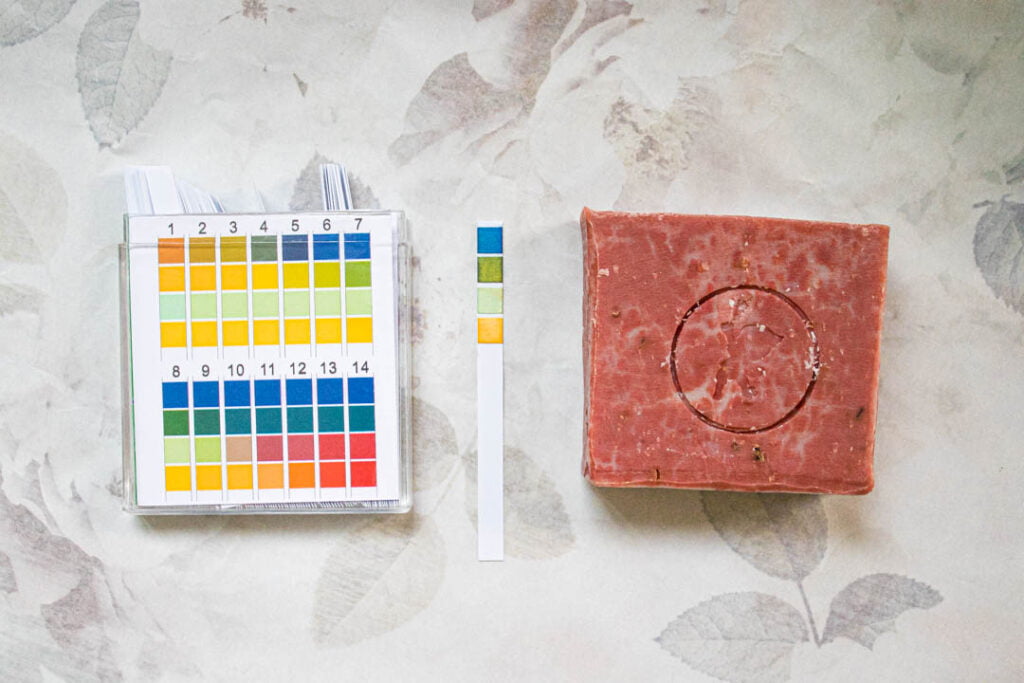
The natural pH value of the skin in most people ranges from 5.6 to 6, while soaps typically have a pH value ranging from 9 to 9.5.
This difference in pH values can lead to skin dryness and damage. To avoid this pH imbalance, the addition of extra plant oils helps reduce the difference, especially when soaps are made using the cold process.
Ours natural soaps have a pH value ranging from from 7 to 8making them much gentler and safer to use than other soaps you may be accustomed to.
Conclusion
Natural Soaps and natural cosmetics in general, is something we have advocated from the very beginning. We want quality products that do not contain chemicals.
It is very important to know that the products we use daily do not harm our health, and also do not damage the environment around us.
Although you may read somewhere that soaps are not cosmetics and that they only cleanse the skin, serving no other purpose, remember the text and facts we mentioned above.
Soaps can nourish and care for the skin, but only if they are made with that purpose and intention. Premium quality natural soaps High-quality natural soaps that care for the skin are not made with the intention of quick and easy profit; they are made because we love nature and care about our health.
Check out our range of natural soaps in our shop and see for yourself that nature and health have no alternative.
With smile,
Balavander
Leave a Reply